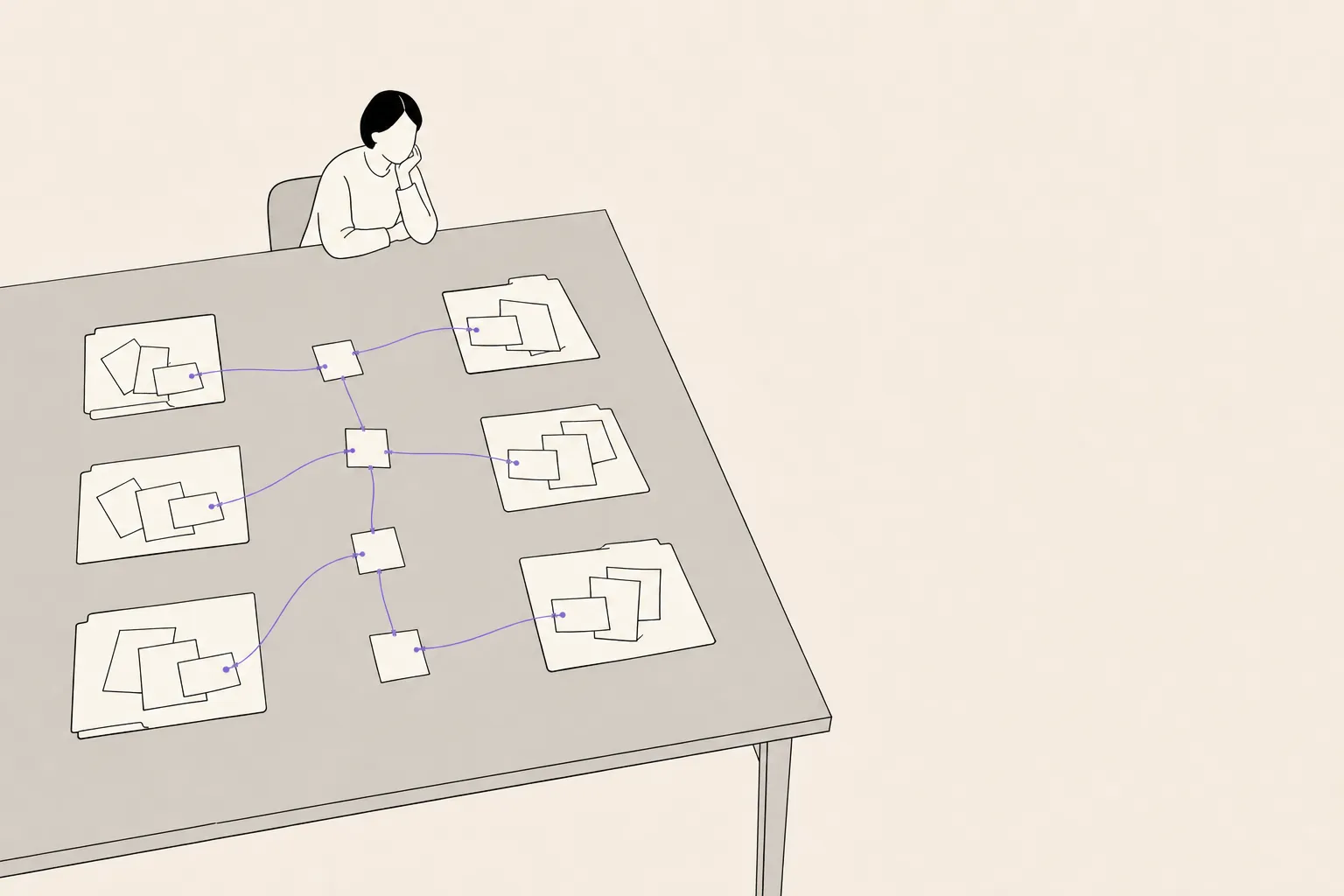


A desk seen from above with six separate folders laid apart, and a thin thread drawing one card out of each folder into a single line.

For consultants and freelancers

One list per client. No way to see your week.

Keeping each client in its own list is the right instinct, and it is exactly what stops you from seeing the only thing that matters on a Monday morning: what has to happen this week, across all of them.

01 / The problem

The structure that protects you also blinds you

Six clients, six lists, and each one clean. That separation is not an accident. It is how you avoid mentioning one client’s work in front of another, how you scope an invoice, and how you hand over cleanly when an engagement ends.

The price is that your actual week is spread across six places. To answer the question of what is due by Thursday you open six lists and hold the answer in your head while you do it. And the reverse question, the one that matters more, is worse: which engagement has gone quiet, and how long has it been quiet for.

Merging the lists would answer both and destroy the separation. So most people just keep opening six lists.

02 / What helps

01

A group that spans lists

Pull this week from every client into one branch of the map while every task stays in the client list it came from. Nothing is merged, nothing is copied, and nothing changes on your phone. You get the cross client view without giving up the separation that earns it.

02

Bill from what actually happened

Every task carries a work log, and finished work is kept by month and by list. When it is time to invoice or write a summary for a client, the record of that engagement is already assembled instead of reconstructed.

03

Stuck belongs to the client, not to you

Mark work stuck and write what it is waiting on, usually something on their side. Two weeks later, when the engagement is questioned, the dates and reasons are on the tasks rather than in a thread you have to go digging through.

03 / Getting it

Coming soon to the Mac App Store

Free to download, and groups that span lists are free permanently. The states and the months of finished work behind the other two are part of the paid tier.

A browser demo on sample data, enough to show you how it works. The Mac app is faster and it runs on your own reminders. Nothing here is saved; refresh puts it back.